rotecting Your Brand in the Era of Deepfakes
Published on January 14, 2026
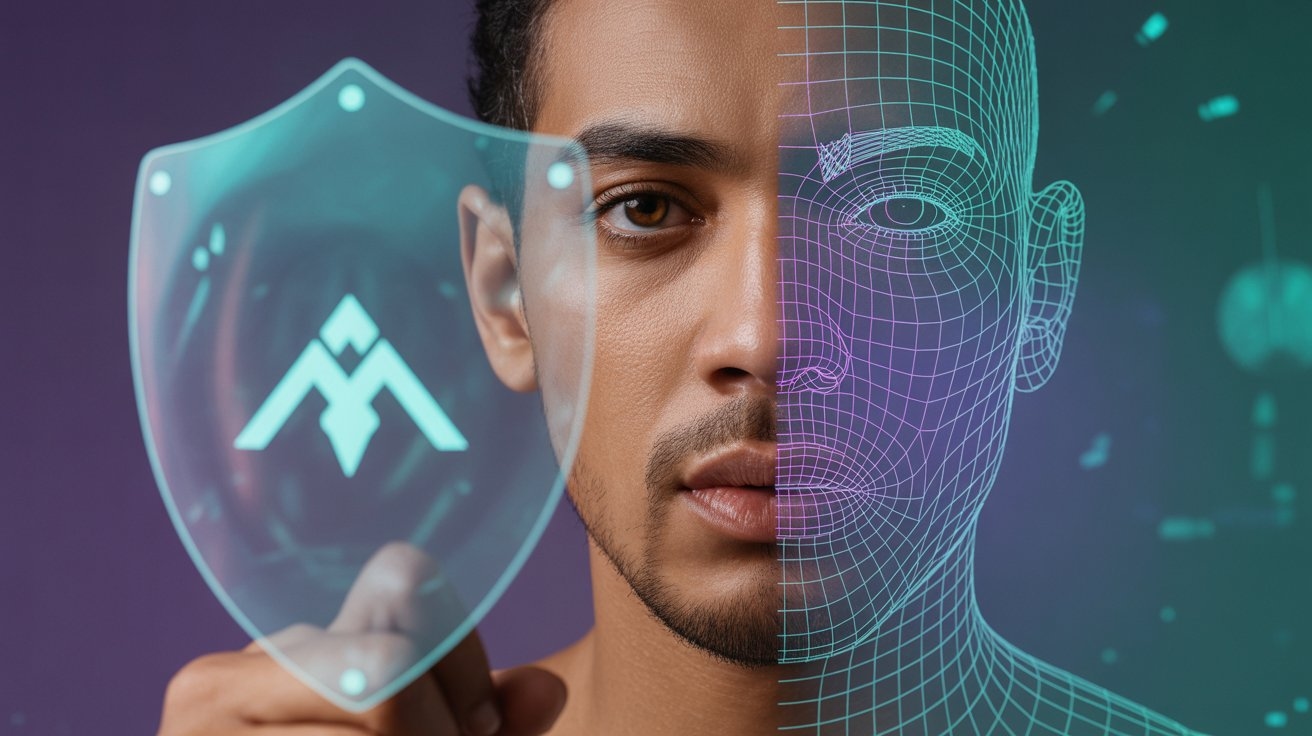
Did you know that deepfake attacks have surged by over 3,000% in the last three years? This is no longer science fiction. Imagine a video of your CEO announcing mass layoffs that never happened, or an audio recording of your customer service team insulting a user—all generated by artificial intelligence. The viral nature of this fake content can destroy a reputation built over decades in just minutes.
In a digital landscape where the line between the real and the virtual is blurring, protecting your brand in the era of deepfakes is no longer an option—it is a vital necessity.
In this article, we will explore concrete strategies, cutting-edge tools, and crisis protocols to secure your corporate identity. We will look at how to anticipate threats and transform your digital integrity into a competitive advantage.
Overview of the Main Topic: The Invisible Threat
What is a Deepfake?
Simply put, a deepfake is media (video, audio, or image) generated or manipulated by artificial intelligence to represent someone saying or doing something they never said or did. Thanks to Deep Learning, these fakes have become hyper-realistic and accessible to everyone.
Why is this crucial today?
The importance of protecting your brand in the era of deepfakes lies in trust. "Trust" is the most valuable currency in the digital economy.
- Financial Risk: A fake announcement can crash your stock price.
- Reputation Risk: Associating your brand with hate speech or controversial statements.
- Fraud: The recent case of a multinational corporation losing $25 million after an employee was duped by a deepfake video conference of their CFO shows that the threat is very real.
GEO Note: Search engines now prioritize content that explains not just the "what," but also the direct impact on the user (YMYL - Your Money Your Life).
Key Strategies to Secure Your Image
Here is how to build a digital fortress around your brand.
1. Implement "Visual and Audio Listening" (Social Listening 2.0)
Traditional keyword-based monitoring is no longer enough. You must monitor visual and audio media.
- Biometric Monitoring: Use software capable of scanning the web to find visual occurrences of your executives or logos in unauthorized contexts.
- Video Sentiment Analysis: Spot sudden spikes in negative virality on platforms like TikTok or YouTube.
- Practical Tip: Set up alerts not just for your brand name, but also for the faces of your executive committee.
2. Adopt the Content Provenance Standard (C2PA)
Transparency is your best weapon. If you can't delete every fake, you can certify the real.
- Digital Watermarking: Integrate invisible signatures into your official content.
- C2PA Coalition: Adhere to the standards of the Coalition for Content Provenance and Authenticity. This allows encrypted metadata to be attached to your files, proving their origin.
- Why it works: When a deepfake circulates, you can immediately prove that the original file did not come from you because it lacks your brand's cryptographic "signature."
3. Educate Your Stakeholders (The Human Firewall)
Technology cannot do everything; humans remain the most common vulnerability.
- Internal Training: Teach your teams (especially Finance and HR) to recognize signs of audio or video deepfakes (irregular blinking, lip-sync issues, monotone voice tonality).
- Verification Protocol: Establish a simple rule: any request for a transfer or sensitive access made via video or audio must be confirmed by a second channel (classic phone call or secure internal message).
4. Prepare a "Deepfake" Crisis Communication Plan
Do not react in the heat of the moment. Having a plan ready to go is essential for protecting your brand in the era of deepfakes.
- Truth Channels: Define in advance which channels are official (Verified X/Twitter account, press section of the website).
- Denial Templates: Prepare draft statements explaining the situation without using overly technical language.
- Proof by Absurdity: Be ready to provide the original file (if it is a modification) or irrefutable proof of the location of the person incriminated at the time of the alleged event.
Common Mistakes: What NOT to Do
Many companies make the situation worse by reacting poorly. Here are the traps to avoid.
| Do's ✅ | Don'ts ❌ |
|---|---|
| React quickly and factually on your official channels. | Ignore the problem hoping the buzz will die down (it won't). |
| Use humor if the deepfake is clearly satirical but harmless. | Threaten immediate lawsuits for an obvious parody (Streisand Effect guaranteed). |
| Collaborate with platforms to report and remove malicious content. | Try to "hack back" the broadcaster or respond aggressively in the comments. |
| Document the incident for future legal evidence. | Delete your own social accounts in panic. |
Insertion Suggestion: A comparison table here (as above) helps readers scan information quickly and improves ranking on featured snippets.
Recommended Tools and Resources
To protect your brand in the era of deepfakes, you need a technological toolkit.
Sensity AI (Paid)
- Feature: Leader in deepfake threat detection. It monitors the web to detect visual identity theft.
- For whom: Large enterprises and public figures.
Intel FakeCatcher (Enterprise)
- Feature: This tool analyzes "blood flow" (subtle skin color changes due to blood circulation) in videos to determine if a human is real.
- For whom: Advanced IT security departments.
Google Images & TinEye (Free)
- Feature: Reverse image search remains an effective basic tool to see if an image has been taken out of its original context.
- For whom: SMEs and quick checks.
Truepic (Paid)
- Feature: Specialized in authenticating media at the source. It ensures your photos and videos are certified the moment they are captured.
- For whom: Insurers, media, and brands concerned with authenticity.
Case Study: The Bank vs. The Voice Clone
Note: This example is based on real attack typologies observed in 2024-2025.
The Scenario: A reputable online bank discovers an audio file circulating on WhatsApp. In it, the CEO is heard admitting, with his exact voice, that the bank is bankrupt and funds must be withdrawn immediately.
The Action:
- Detection: The bank's social listening tool spotted the file 15 minutes after its first broadcast using audio keywords ("bankruptcy", "withdrawal").
- Analysis: The security team used spectral detection software proving the voice was synthetic (lack of natural breathing patterns).
- Response: Within the hour, the bank published a video of the CEO (authenticated by watermark) on its mobile app and social networks, denying the rumor and showing real-time financial health indicators.
The Result: Instead of a bank run, the bank saw its trust score increase by 12% in post-crisis polls, with customers praising the institution's responsiveness and transparency.
Conclusion
We are entering an era of "default skepticism." Paradoxically, this is an opportunity. Brands that know how to protect their integrity in the era of deepfakes will become havens of trust for consumers.
Do not see the deepfake solely as a technological threat, but as a communication challenge. Your best defense remains an authentic and transparent relationship with your audience. If your customers truly know you, they won't be fooled by a copy.
Next step for you: Gather your communication and security team this week. Ask them a single question: "If a video of me announcing the company's closure came out tomorrow morning, do we have the technical means to prove it's fake in less than an hour?" If the answer is no, start with Step 2 of this guide.
FAQ: Your Questions on Brand Protection
1. Are SMEs really concerned by deepfakes? Absolutely. While big brands are targeted for stock manipulation, SMEs are often victims of CEO fraud (fake wire transfer orders) via voice clones, as their security protocols are often less strict.
2. Is there a foolproof way to detect a deepfake? No, it is a game of cat and mouse. As detection tools improve, generation AIs improve too. That is why an approach combining technology and human verification is the only viable method to protect your brand in the era of deepfakes.
3. Does the law protect us against these attacks? Legislation is evolving (like the EU AI Act), but the law is often slower than technology. It is difficult to prosecute anonymous creators located in other jurisdictions. Technical prevention and communication responsiveness remain more effective than immediate legal action.
4. How much does a deepfake protection solution cost? It varies. Basic monitoring can be done with existing tools. Specialized solutions like Sensity or Reality Defender can cost from a few hundred to several thousand dollars per month, depending on the volume of data to be monitored.
Comments
Be the first to comment on this article.
Leave a Comment